Home > Sandwich ELISA Kits > Human Serine Palmitoyltransferase, Long Chain Base Subunit 3 (SPTLC3) ELISA Kit
Product Name:
Human Serine Palmitoyltransferase, Long Chain Base Subunit 3 (SPTLC3) ELISA Kit
Cat.#:
JL17478
Regulatory Status:
Alternative:
SPTLC2L; SPT 3; LCB 3; C20orf38; Aminotransferase 2; Serine-palmitoyl-CoA transferase 3; Long chain base biosynthesis protein 3
Detection Method:
ELISA
Assay Type:
Sandwich
Detection Range:
0.156-10ng/mL
Sensitivity:
0.07ng/mL
Specificity:
This kit recognizes Human SPTLC3 in samples. No significant cross-reactivity or interference between Human SPTLC3 and analogues was observed.
Sample Type:
Tissue homogenates;cell lysates and other biological fluids
Assay Procedure:

Research Area:
Signal Transduction
Size & Price: 
Product Datasheets
Instruction: 
| SPTLC3
This gene encodes a subunit of the serine palmitoyltransferase complex which catalyzes the rate-limiting step in sphingolipid biosynthesis. This subunit metabolizes lauroyl- and myristoyl-CoA and generates C14 and C16-sphingoid bases.The mammalian serine palmitoyltransferase(SPT) enzyme is composed of three core subunits: SPTLC1, SPTLC2, and SPTLC3. Whereas SPTLC1 and SPTLC2 are ubiquitously expressed, SPTLC3 expression is restricted to a few specific tissues.Genetic and population based studies have shown that SPTLC3 expression and function are associated with an altered plasma Sphingolipids(SL) profile and an increased risk for cardio-metabolic diseases. Animal and in vitro studies showed that SPTLC3 might be involved in hepatic and cardiac pathology and could be a therapeutic target for these conditions.| Typical data
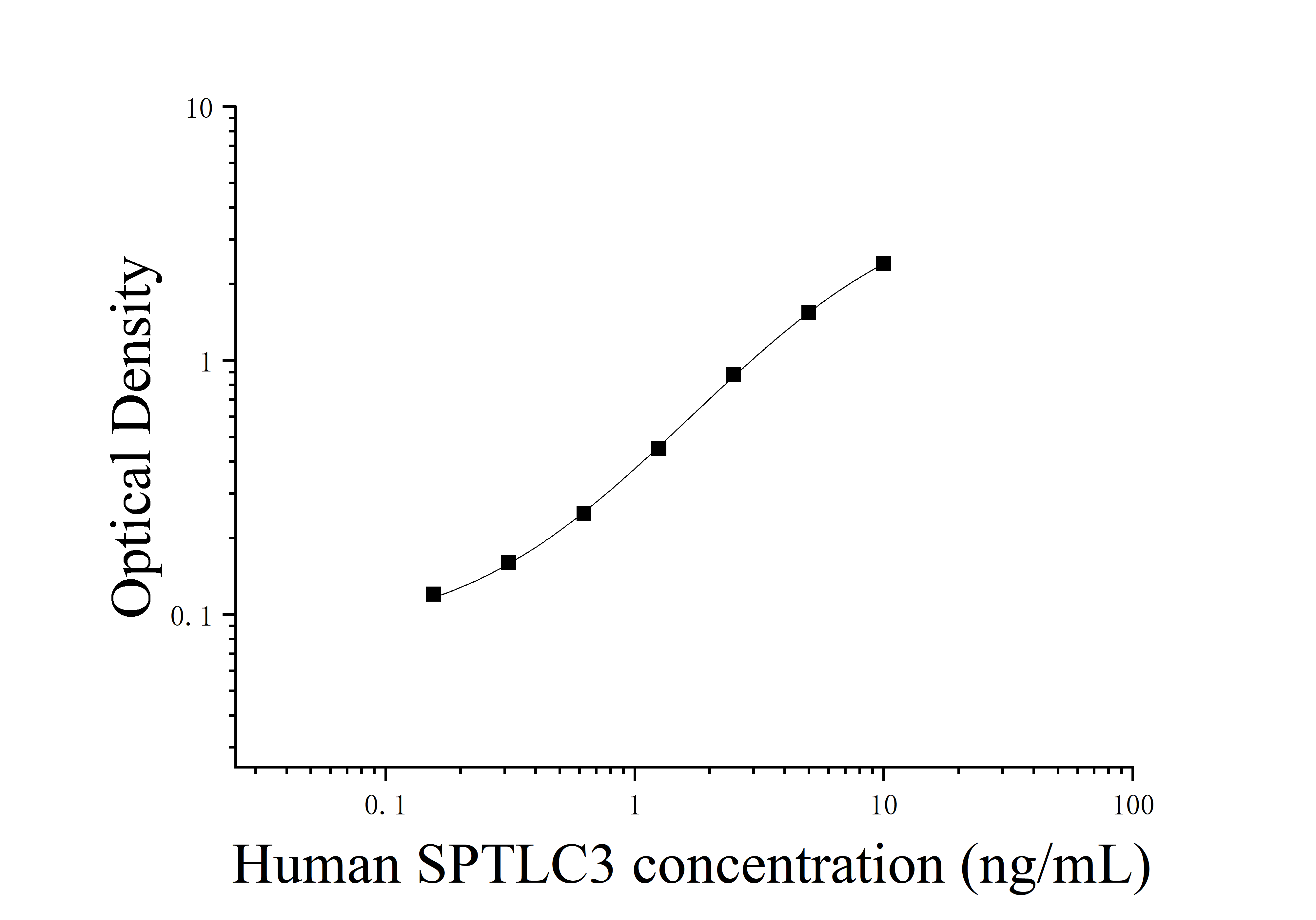
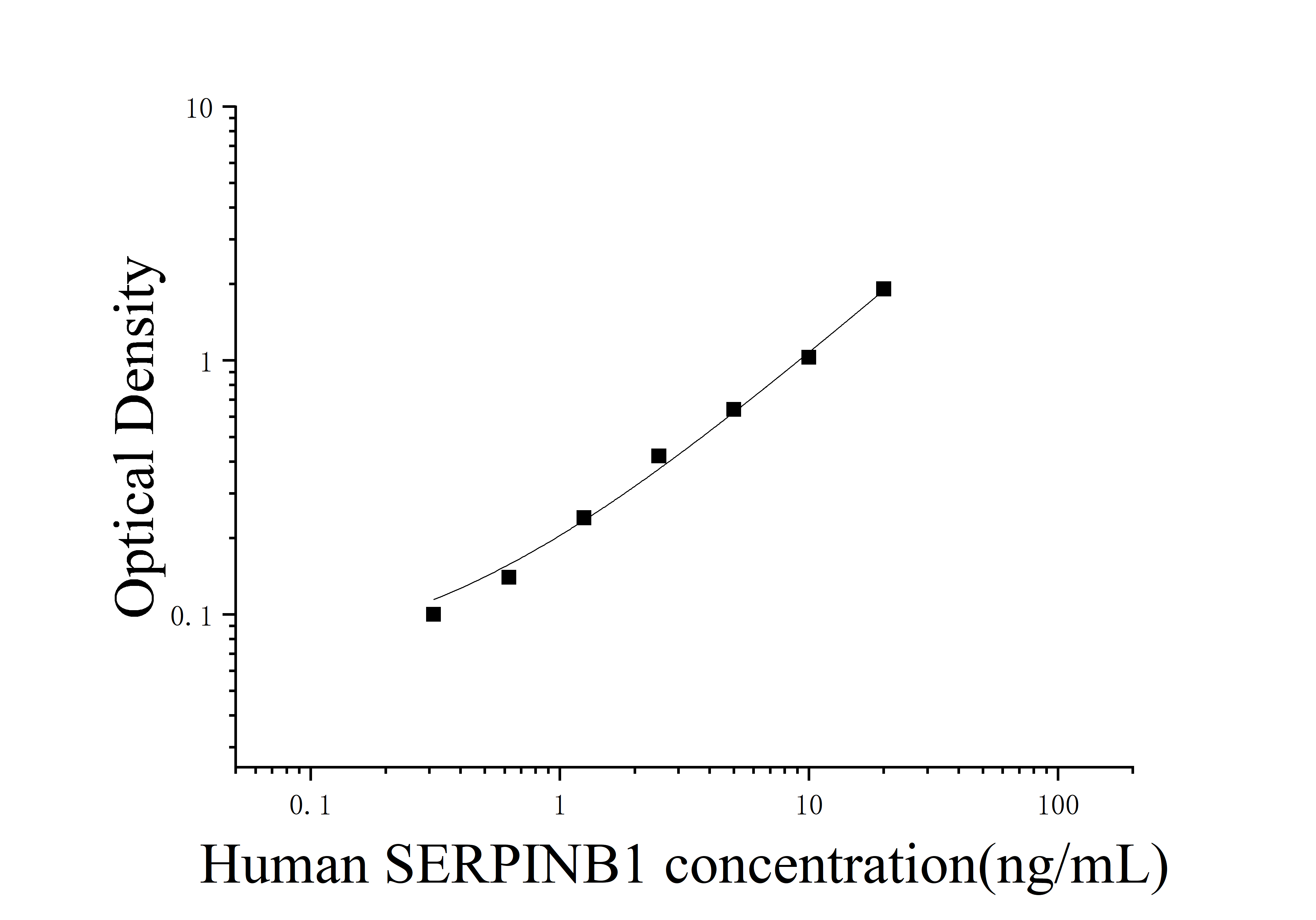
As the OD values of the standard curve may vary according to the conditions of the actual assay performance (e.g. operator, pipetting technique, wash technique or temperature effects), the operator should establish a standard curve for each test. Typical standard curve and data are provided below for reference only.| Concentration (ng/mL) | 10 | 5 | 2.5 | 1.25 | 0.625 | 0.312 | 0.156 | 0 |
| OD | 2.49 | 1.62 | 0.96 | 0.53 | 0.33 | 0.24 | 0.2 | 0.08 |
| Corrected OD | 2.41 | 1.54 | 0.88 | 0.45 | 0.25 | 0.16 | 0.12 | - |
| Repeatability
Intra-assay Precision (Precision within an assay):CV% < 10%; Inter-assay Precision (Precision between assays):CV% < 10%| Recovery
The recovery of Human SPTLC3 spiked at three different levels in samples throughout the range of the assay was evaluated in various matrices.| Sample Type | Range(%) | Average Recovery(%) |
| Tissue Homogenates(n=8) | 80-101 | 96 |
| Cell Culture Supernates(n=8) | 92-105 | 101 |
| Linearity
Samples were spiked with high concentrations of Human SPTLC3 and diluted with Universal Diluent to produce samples with values within the range of the assay.| Tissue Homogenates(n=4) | Cell Culture Supernates(n=4) | ||
| 1 : 2 | Range (%) | 83-95 | 88-96 |
| Average (%) | 91 | 93 | |
| 1 : 4 | Range (%) | 89-103 | 87-108 |
| Average (%) | 94 | 100 |
Related Product



Size
Quantity
Price ($)
48T
 1
1

360 / 360
96T
1
460 / 460